

Taking My CBT: What I Wish I’d Known Beforehand
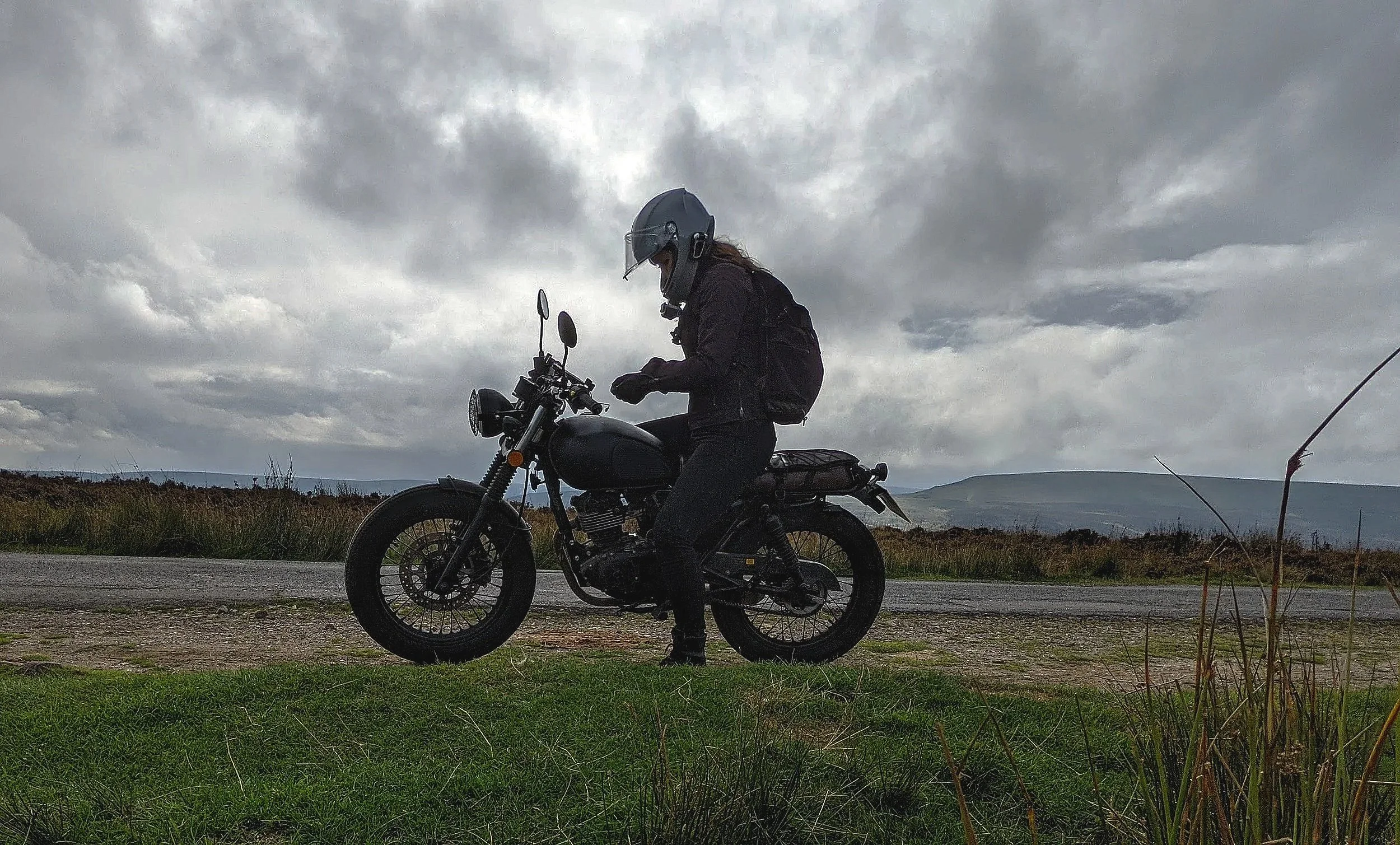
I booked my CBT (Compulsory Basic Training) for July 2020 — a little birthday present to myself. At the time, I was excited, nervous, and honestly just keen to get on two wheels as quickly as possible. Looking back now, there’s one thing I really wish I’d done differently: spent more time researching the training school. I completed my CBT with a motorcycle training school in Vauxhall, and unfortunately, I wouldn’t recommend them.
*For anyone based in the UK, it really pays to choose a reputable provider with great reviews and well-maintained bikes. If you’re based elsewhere, make sure to check your local training requirements and school quality too!
Why Your CBT Training School Matters
Your CBT is not just a box-ticking exercise. It’s the foundation of your entire riding journey. A CBT should be a full-day course. With the school I did mine with, it was condensed into a half-day, justified by Covid backlogs and the need to push more students through. While I understand that many businesses struggled during lockdown, cutting corners on motorcycle training is not something I believe should ever happen.
Because the course was rushed:
We spent limited time on manual (geared) motorcycles
Training took place in a closed primary school playground
When it came time for the road ride, we were switched to automatic scooters
That jump, from roughly two hours on a geared bike straight to owning and riding your own 125cc motorcycle, is honestly terrifying. I managed it, but I wouldn’t recommend it to anyone starting out. In all honestly, when I finally purchased my 125cc I wasn’t ready and spent many nights learning the basics.
Is the CBT Easy to Fail?
Technically, the CBT isn’t a “test.” It’s treated as a training day, and most people pass. However, if the instructor doesn’t feel you’re safe to ride on the road, they can refuse to issue a certificate (this is rare, but it does happen).
That said, the quality of instruction massively impacts how confident and prepared you’ll feel once you leave.
Below is a breakdown of what to expect, plus tips I wish someone had given me beforehand.
What to Bring to Your CBT
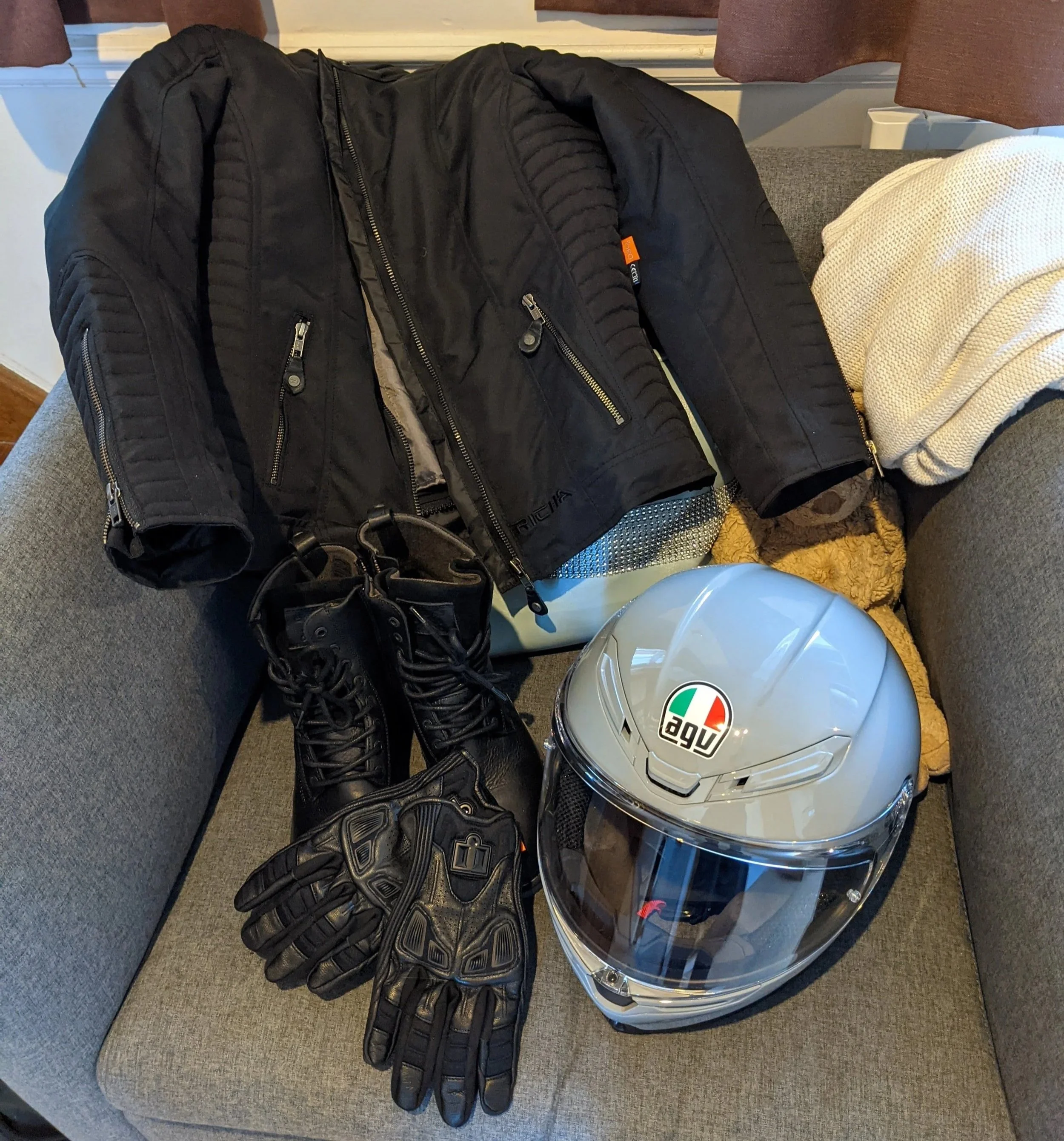
Come prepared - this makes a huge difference to your comfort and focus.
Essentials:
Sturdy boots that cover your ankles
A sturdy jacket (motorcycle jacket if you have one)
Heavy jeans (no leggings or thin trousers)
Helmet (many schools stopped providing these post-Covid)
Gloves
Full driver’s licence (or provisional)
CBT booking confirmation
Water and food/snacks
Waterproofs (trust me — nothing ruins a CBT faster than being soaked)
If you’re doing your CBT in winter, layer up properly. You’ll be outside most of the day, standing around between exercises, and it gets cold fast.
What to Expect During Your CBT
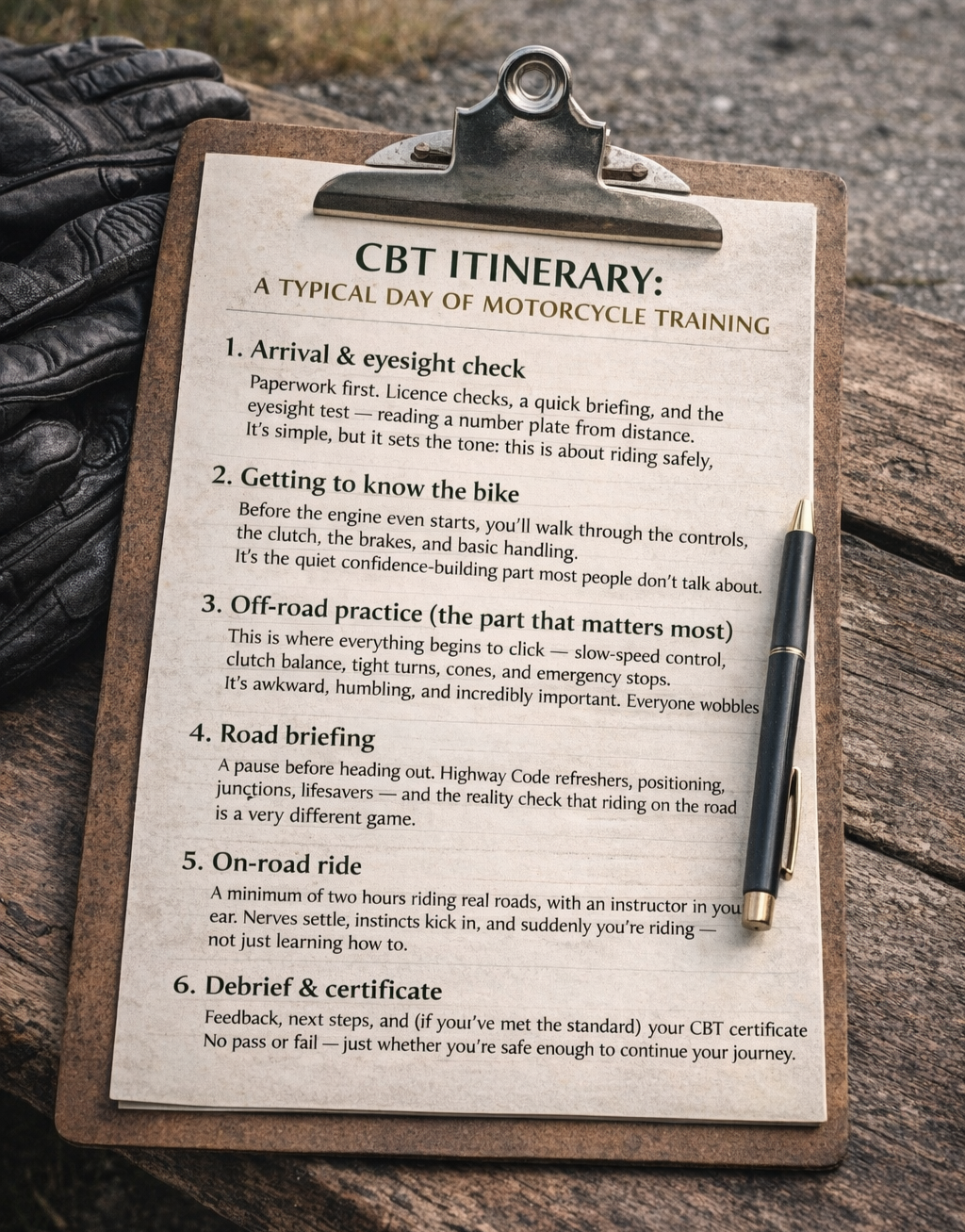
Your CBT is broken down into five modules, labelled A–E.
A. Introduction
The day starts with:
An eyesight test (reading a number plate from 20 metres)
A safety briefing covering:
Riding gear
Basic motorcycle safety
Expectations for the day
Nothing intense here — just pay attention.
B. Practical On-Site Training
Once geared up and in a high-vis vest, you’ll be introduced to your bike. Most schools use a Honda CBF125 or a similar 125cc motorcycle.
You’ll learn:
Where everything is: clutch, throttle, brakes, gear lever
How to take the bike off the centre stand and side stand
Basic bike handling
Then comes clutch control.
You’ll slowly release the clutch to find the bite point — that magical moment when the bike starts moving without throttle. This is where most beginners struggle (myself included). I stalled constantly even once I got my own bike.
If this happens to you: don’t panic. Everyone stalls. It’s part of learning.
You’ll practice:
Slow straight-line riding
Controlled stops
Balancing throttle and clutch
It’s frustrating at first, but it will click.
C. Practical On-Site Riding
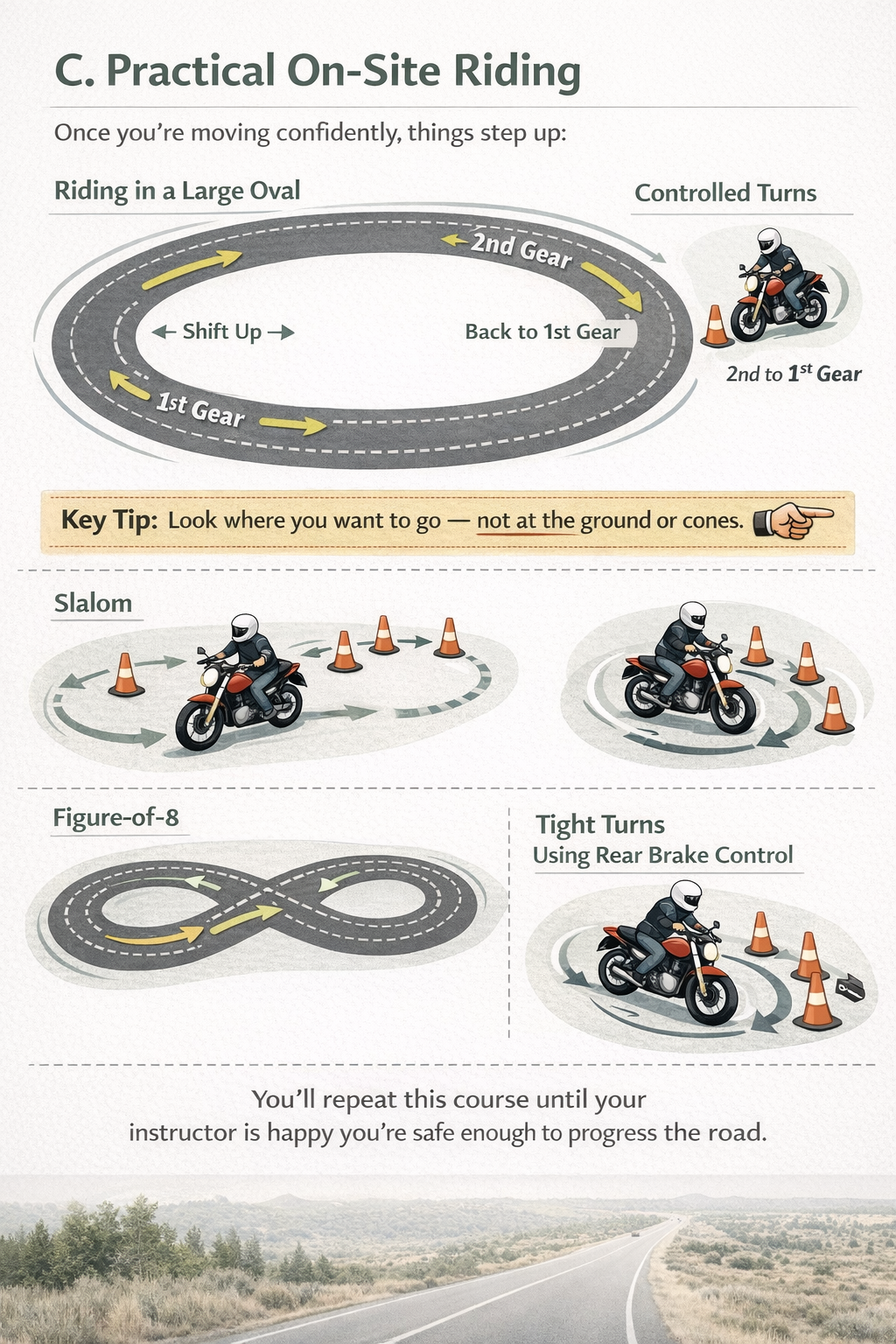
Once you’re moving confidently, things step up:
Riding in a large oval
Shifting into second gear, then back to first
Controlled turns
Key tip:
👉 Look where you want to go — not at the ground or cones.
From here, you’ll add:
Slaloms
Figure-of-8s
Tight turns using rear brake control
You’ll repeat this course until your instructor is happy you’re safe enough to progress to the road.
D. Practical On-Road Preparation
Before heading out, you’ll cover:
Key sections of the Highway Code
Road positioning
Hazards and distractions
Riding styles and awareness
You’ll also be fitted with a one-way radio, allowing the instructor to guide you while riding.
E. Practical On-Road Riding
This is the part everyone worries about — but it’s usually less scary than expected.
You’ll:
Follow the instructor through quiet residential streets
Practice junctions, turns, and road positioning
Pull over for emergency stops and U-turns
As confidence builds, you’ll move onto:
Busier roads
Roundabouts
Traffic flow and lane discipline
Riding with cars, buses, and cyclists
The instructor will rotate riders so they can assess everyone properly — correcting mistakes and giving real-time feedback.
You should be on the road for at least a couple of hours.
If you can ride safely, respond to instructions, and demonstrate improvement, you’ll receive your CBT certificate back at the training centre.
Life After Your CBT
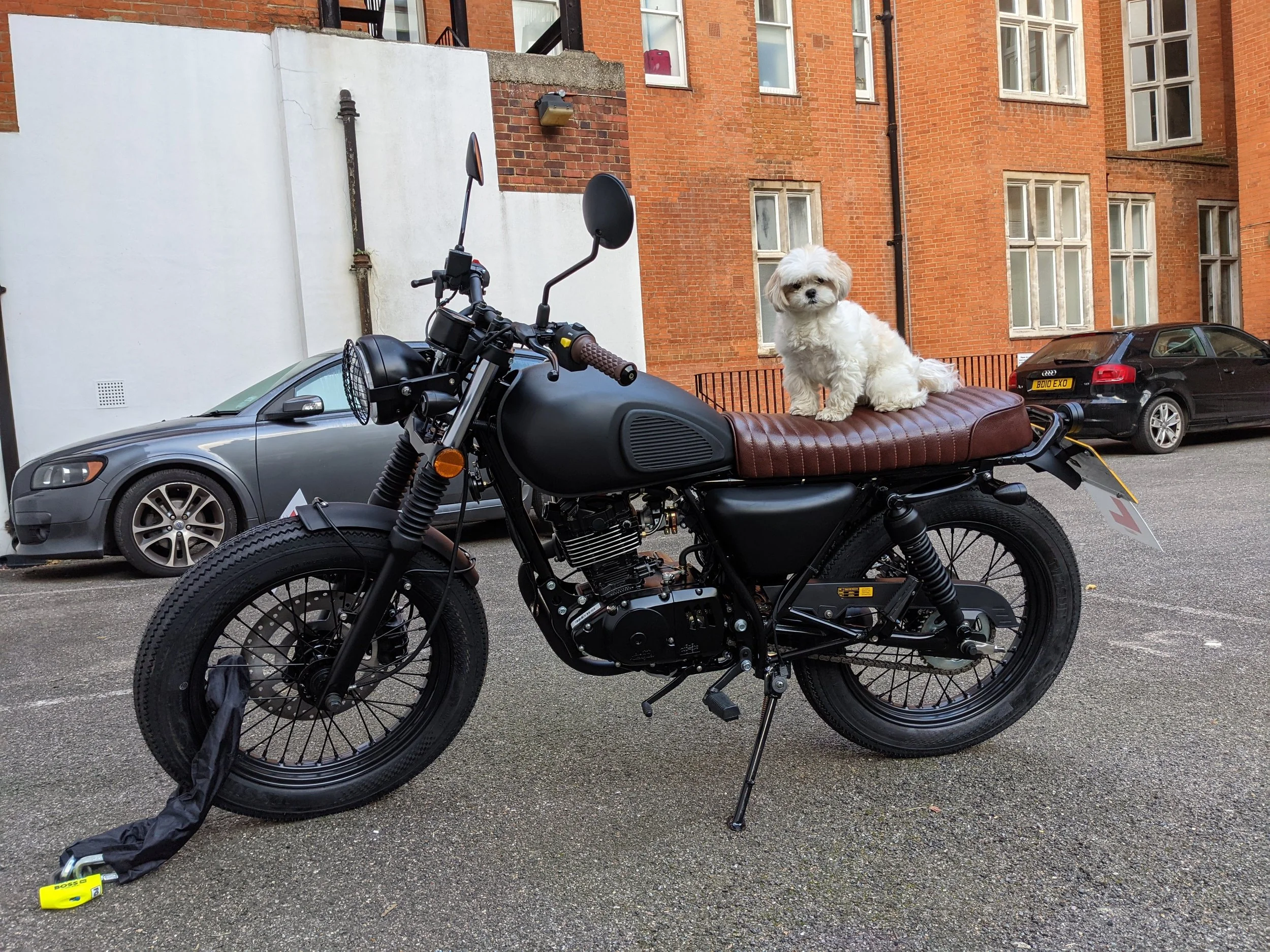
With your CBT certificate in hand, you’re now legally allowed to ride:
A 125cc motorcycle
With L-plates
No motorways
No pillion passengers
And just like that, a whole new world opens up on two wheels.
Recommended Motorcycle Training Schools
If you’re choosing where to do your CBT (or further training), I strongly recommend researching properly. These schools stand out:
🏍 VC London – Beginner Training
If you’re unsure whether riding is for you, or want extra confidence before or after your CBT, the VC X Herald Beginners Moto School is a fantastic option. They partner with Herald Motorcycles and offer supportive, confidence-building training days with licensed instructors.
🏍 ACE Motorcycle Training – Keynsham
Hands down one of the best training schools I’ve encountered. CBT, Mod 1, Mod 2 - they make training thorough, fun, and confidence-boosting. Highly recommended and the school I used to my MOD1 and MOD2.
🏍 1st Motorcycle Training – Birmingham & Midlands
I haven’t trained with them personally, but I’ve consistently heard good feedback from other riders - always a positive sign.
Final Thoughts
Your CBT is more than a certificate, it’s your first real step into motorcycling. Don’t rush it, don’t cheap out, and don’t settle for poor training.
A good CBT instructor won’t just help you pass the day, they’ll set you up to ride confidently, safely, and with enjoyment long after you leave the training centre.
If you’re reading this before booking yours: choose wisely. Your future riding self will thank you.